
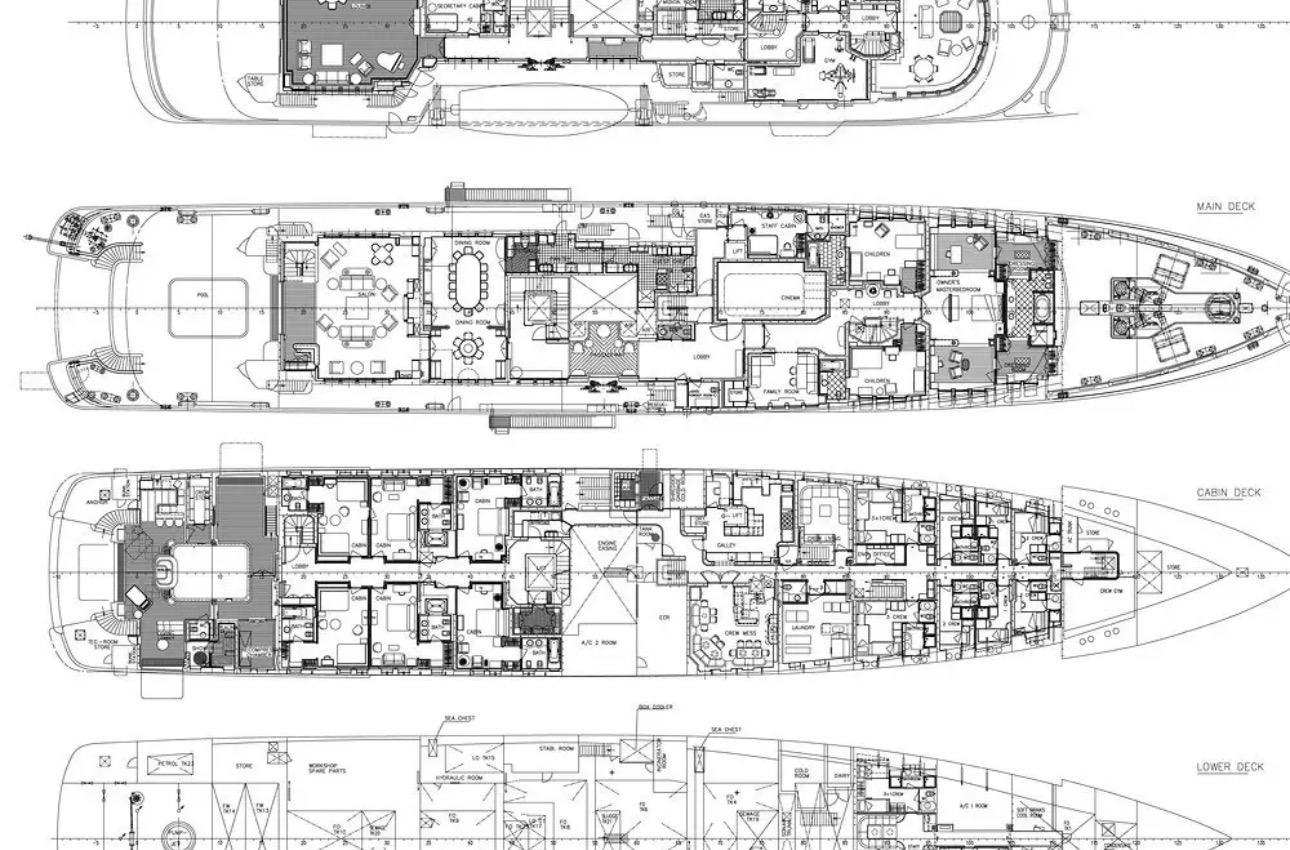
Start With the Project, Not the Shipyard
One of the most common mistakes in vessel conversions and major refits is starting with the shipyard rather than the project itself. Once a suitable vessel has been found, it is tempting to move directly into engineering and construction. The project appears to be progressing, but in reality many of the assumptions that will determine its success have not yet been verified.
Every project should begin by clearly defining the owner’s vision and operational profile. What will the vessel actually do? How will it be operated? What are the commercial, operational and technical objectives? Those answers form the project definition and become the benchmark against which every subsequent decision is measured.
The existing vessel should then be assessed through surveys, certification reviews, available drawings and onboard inspections to establish a verified technical baseline. Only after comparing the owner’s objectives with the vessel’s actual condition can technical and commercial feasibility be confirmed. At this stage, involving a naval architect and, where appropriate, the intended classification society allows fundamental questions to be answered before significant commitments are made.
The first project gate is therefore relatively simple. Is the concept technically achievable? Is it commercially viable? Does it support the intended operational profile? Are the project’s limitations understood? If those questions cannot be answered with confidence, progressing to the next phase rarely reduces project risk.
Project Governance Framework
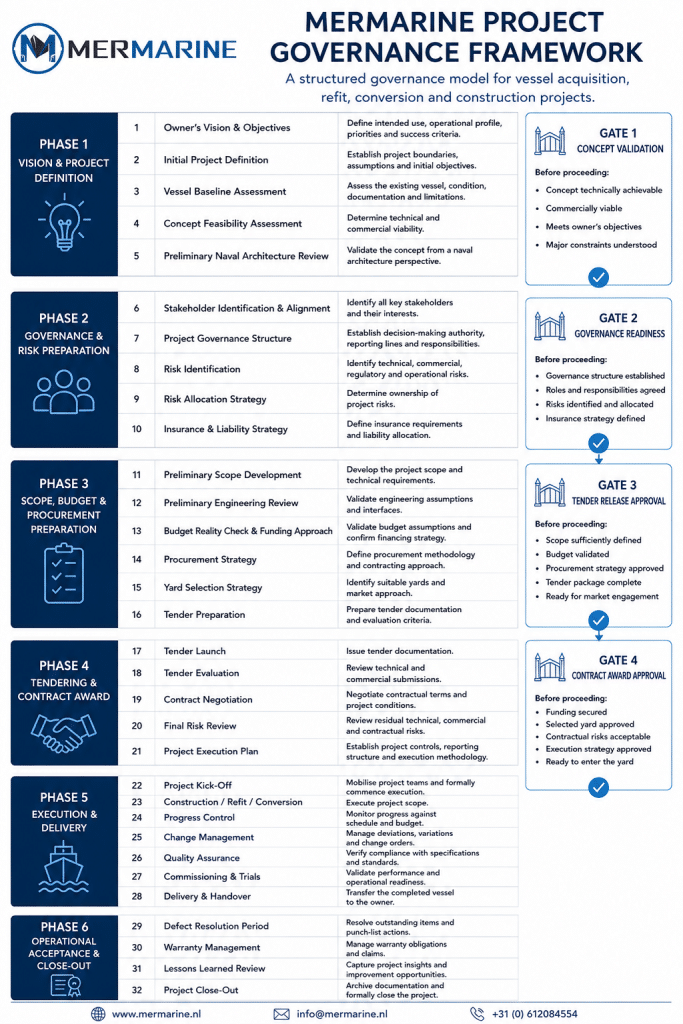
The framework below illustrates the governance model I typically apply to vessel acquisition, refit and conversion projects. Not every project requires every phase in the same depth. The framework should always reflect the size, complexity and risk profile of the project, while the underlying principle remains unchanged: validate first, commit capital second.
Governance Creates the Foundation
Once technical and commercial feasibility have been confirmed, the project moves into governance. This is not about engineering the vessel; it is about engineering the decision-making process.
The stakeholders are identified, decision-making authority is established and the chain of command becomes clear. Roles and responsibilities are defined, project risks are identified and allocated, and the insurance and liability strategy is determined before engineering progresses. Only after these foundations have been established does it make sense to develop the preliminary scope, validate engineering assumptions, confirm budgets, determine the procurement strategy, prepare tender documentation and define the shipyard selection strategy.
By the time the tender is issued, the market is pricing a clearly defined project rather than interpreting an evolving concept. That generally leads to more accurate proposals, stronger contractual positions and fewer surprises during execution.
Why Go/No-Go Gates Matter
Go/no-go gates are sometimes viewed as unnecessary delays because they interrupt momentum. In reality, they do the opposite. They ensure that sufficient information has been gathered before additional time, resources and capital are committed.
Changing direction during the concept phase is relatively inexpensive. Once engineering has progressed, contracts have been signed or construction has started, every change becomes progressively more expensive. Each completed gate therefore reduces uncertainty before moving into the next phase, allowing decisions to be made on verified information rather than assumptions.
The Cost of Skipping the Early Stages
Projects rarely become difficult because the engineering itself is impossible. More often, engineering begins before the project has been properly defined. Assumptions gradually become design revisions, design revisions become change orders, and change orders eventually become delays and budget overruns.
A structured project framework cannot eliminate every project risk, nor should it attempt to. Its purpose is to reduce uncertainty before uncertainty becomes expensive, ensuring that major decisions are taken when they are still relatively easy to change rather than after they have become contractual commitments.
Final Thoughts
The framework described above is intentionally comprehensive. A routine refit does not require the same level of preparation as a complex vessel conversion, and the governance process should always reflect the scale, complexity and risk profile of the project. The underlying principle, however, remains the same regardless of project size.
Validation should precede engineering. Governance should precede tendering. Construction should follow informed decisions rather than assumptions.
Projects that appear to start more slowly often progress more efficiently once execution begins. Not because fewer challenges arise, but because the critical questions have already been answered before significant capital was committed.
Good governance does not delay a project. It provides the structure that allows the project to move forward with confidence.