Introduction
Large yacht and commercial vessel projects rarely become difficult because of the engineering alone. As complexity increases, every important decision begins to influence several disciplines at the same time. A design revision may affect structural engineering, classification, procurement, contractual obligations, insurance, programme and future operation. By the time those consequences become visible, changing direction is often expensive.
Owners appoint an Owner’s Representative for many reasons. Some expect an additional pair of eyes during construction or refit. Others are looking for technical expertise or someone to coordinate communication. Those responsibilities may form part of the role, but they do not explain its real value.
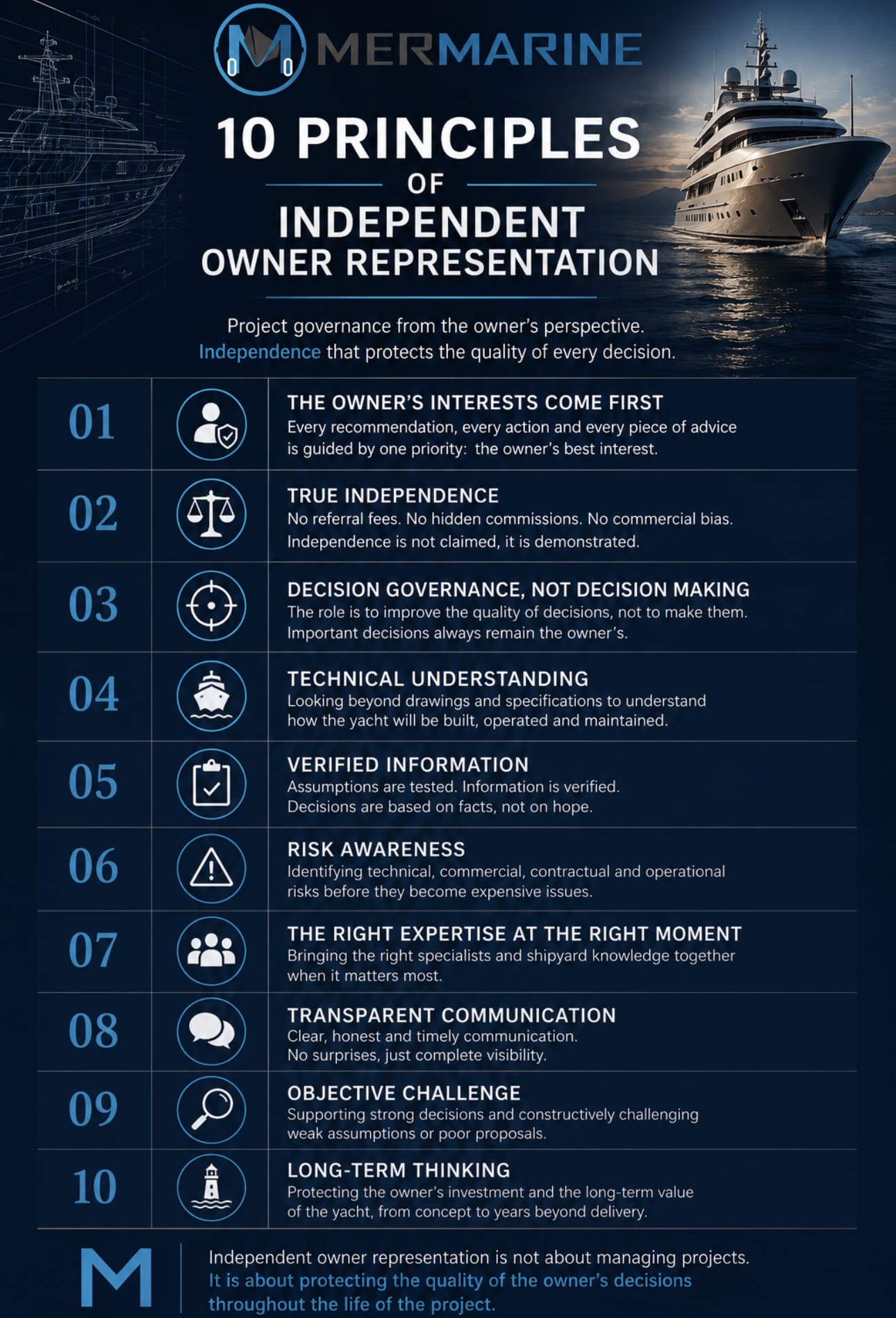
An independent Owner’s Representative exists to improve the quality of the owner’s decisions throughout the project. The objective is not to manage the project instead of the project manager, nor to replace the naval architect, shipyard, surveyor or classification society. The objective is to ensure the owner receives balanced, independently verified advice before important commitments are made.
After more than a decade operating a specialised shipyard and later working as an EMCI Certified Marine Surveyor, one observation remained consistent. Projects rarely drift away from their objectives because of one dramatic mistake. More often, they change direction through a series of individually reasonable decisions whose wider consequences were never fully understood.
Independence Means More Than Objectivity
Every professional involved in a project is expected to act responsibly. Independence, however, requires more than good intentions. It requires freedom from commercial influence.
An independent Owner’s Representative should have no financial incentive connected to the selection of a shipyard, subcontractor or supplier. Referral commissions, hidden rebates and commercial arrangements create unnecessary doubt about whether advice is being given for the owner’s benefit or someone else’s.
Transparency is therefore essential. Where commercial incentives exist, they should belong to the owner and be disclosed openly. Independence is demonstrated through conduct rather than claimed as a marketing statement.
Governance Rather Than Project Management
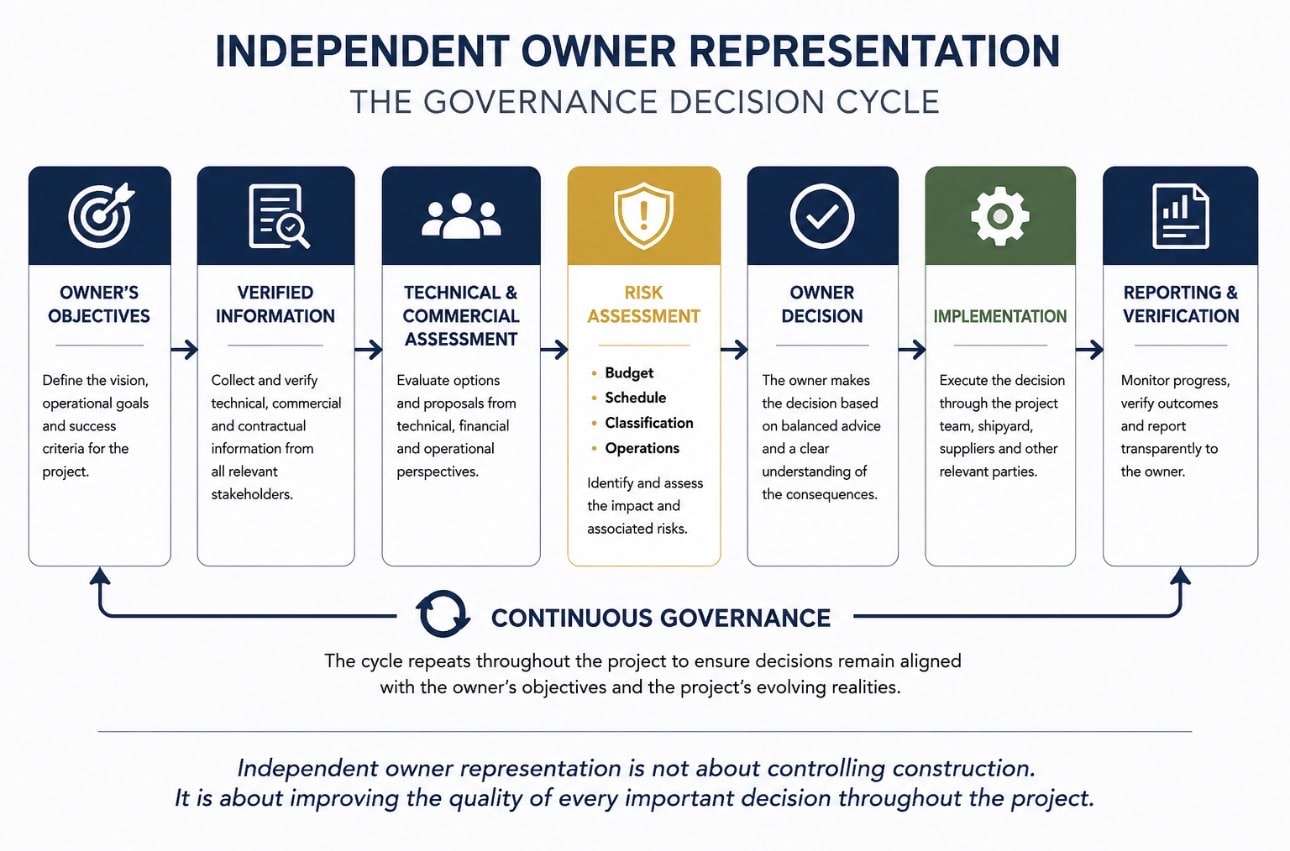
Project management and owner representation work closely together but fulfil different functions. A project manager is responsible for delivering the agreed project. An independent Owner’s Representative is responsible for helping the owner determine whether the project continues to serve its original objectives.
That distinction becomes particularly important when change orders, alternative technical solutions or commercial proposals arise. A technically attractive solution may introduce contractual risk, increase operational cost or affect delivery. Equally, rejecting a proposal may create different long-term consequences. Good governance considers the complete picture before a decision is taken.
The Owner Always Decides
An Owner’s Representative should never become another decision maker. Every significant decision remains the owner’s responsibility.
The representative’s role is to present balanced information, explain technical and commercial consequences, identify risks and ensure assumptions have been verified wherever reasonably possible. Independent advice sometimes confirms the owner’s preferred direction. At other times it challenges it. The purpose is not agreement. The purpose is better informed decisions.
Not Every Project Requires Full-Time Representation
Continuous owner representation is not necessary for every assignment. The required level of involvement should reflect the project’s complexity, financial exposure and risk profile.
Many owners benefit from independent support at specific milestones rather than throughout an entire programme. This may include technical due diligence before acquisition, contract reviews, milestone inspections, payment verification, technical dispute support or an independent project review.
In practice, full owner representation often delivers the greatest value once projects approach or exceed approximately €2 million, where technical complexity and commercial exposure increase significantly. Smaller projects can also benefit from independent oversight, although the scope is normally focused on clearly defined decisions rather than continuous governance.
Building the Right Team
Complex projects depend on specialists. Naval architects, designers, engineers, classification societies, insurers, lawyers, project managers and shipyards each contribute knowledge from their own discipline.
The Owner’s Representative does not replace those specialists. Instead, the role ensures the right expertise is involved at the right time and that recommendations are considered together rather than in isolation. Good governance connects disciplines before decisions are made rather than resolving conflicts afterwards.
Communication and Reporting
Owners should never have to rely on assumptions to understand the status of their project. Clear reporting, documented decisions and transparent communication reduce uncertainty and improve accountability.
Disagreements are inevitable in technically demanding projects. Effective owner representation separates facts from emotion, encourages constructive discussion and escalates issues only when necessary to protect the owner’s interests, contractual position or the quality of the finished asset.
When Should an Owner Appoint an Owner’s Representative?
The best moment is usually before major commitments are made. Independent involvement during yard selection, contract negotiations and early design development generally provides greater value than becoming involved after significant decisions have already been taken.
That does not mean later involvement has no value. Independent project reviews during construction, refit or dispute resolution frequently help owners regain an objective overview and identify practical options for moving forward.
Final Thoughts
An independent Owner’s Representative is not another layer of management. The role exists to strengthen project governance from the owner’s perspective.
Successful projects are rarely defined by perfect engineering alone. They are shaped by hundreds of decisions, each carrying technical, commercial and contractual consequences. Helping owners understand those consequences before commitments are made remains the central purpose of independent owner representation.
Ultimately, the vessel belongs to the owner, the investment belongs to the owner and every important decision remains the owner’s decision. The responsibility of an independent Owner’s Representative is to ensure those decisions are made with clarity, balance and independently verified information.